
 EN
EN
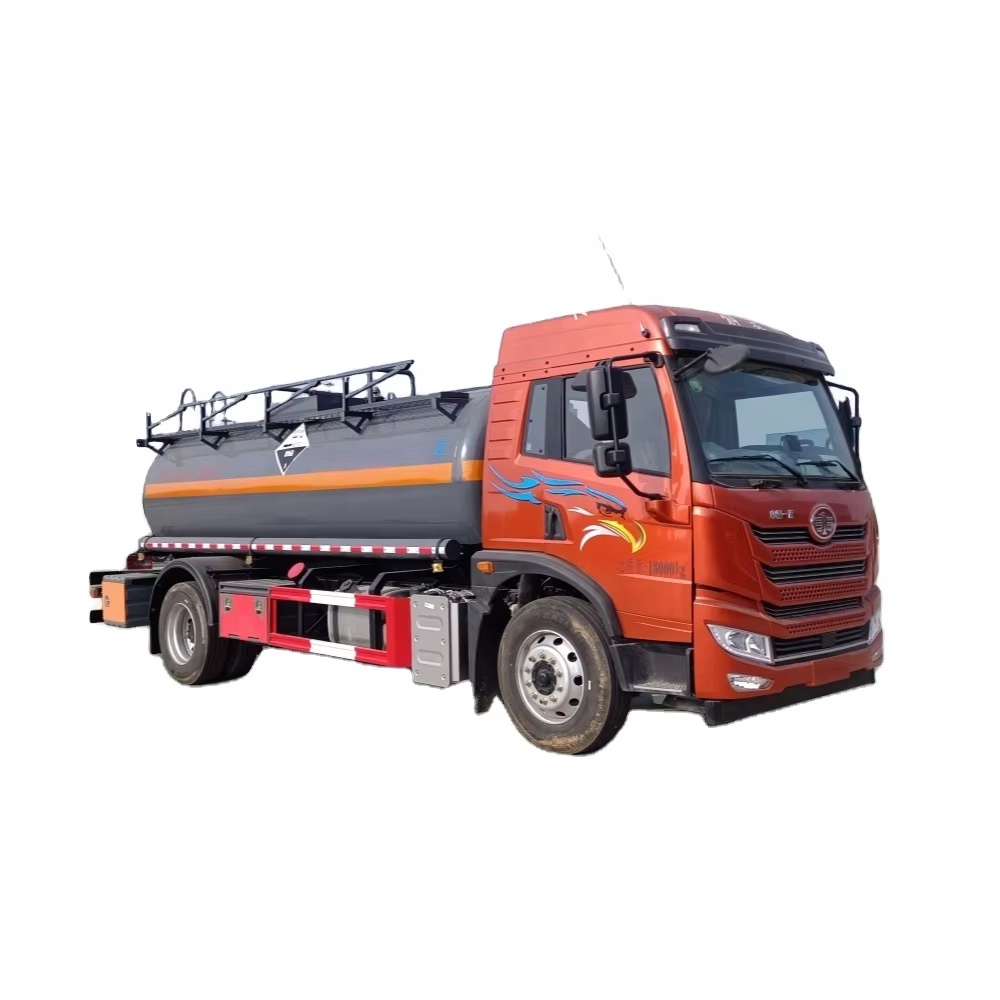
Understanding Corrosives Tanker Trucks and Their Function in Chemical Logistics
Defining the corrosives tanker truck in industrial supply chains
Tankers designed for corrosive substances are special transport vehicles built to carry aggressive chemicals including things like sulfuric acid, sodium hydroxide, and various chlorinated compounds without leaking or reacting. The tanks themselves are made from materials that resist corrosion, typically using options such as 316L stainless steel, certain aluminum alloys, or carbon steel tanks lined with rubber. A recent study on material compatibility from 2023 found that around 72 percent of chemical producers check material grades carefully to stop their tanks from breaking down over time. This kind of preventive measure matters a lot because when maintenance issues happen unexpectedly, they tend to cost about $2.1 million per incident according to data published in Industrial Safety Quarterly last year.
The critical role of corrosive chemical transport in manufacturing continuity
The tankers we're talking about here keep everything sealed tight so there are no leaks, which means industries like pharmaceutical companies and those making semiconductors can get their goods without any interruptions. Contamination is a big problem for many businesses actually, with reports showing that around one out of every five manufacturers faces disruptions because of it each year. That's why these modern tanks come equipped with real time monitoring systems that work alongside strict safety rules for handling dangerous stuff. The result? A massive drop in spills - somewhere around 91 percent less than what happens with regular old tankers according to a study from Chemical Transport Review back in 2023.
Design and Material Selection for Corrosives Tanker Trucks
Construction Standards and Regulatory Compliance for Corrosive Cargo Tanks
Corrosives tanker trucks must comply with international standards such as ISO 28300 for chemical transport tanks and UN Model Regulations for hazardous goods. A 2022 Transport Safety Board analysis revealed that 89% of acidic material incidents occurred in tanks violating minimum wall thickness requirements. Key mandates include:
- Double-walled designs with leak-detection sensors
- Third-party certification of welding joints for pressurized cargo
- Emergency venting systems calibrated to vapor pressure thresholds
Manufacturers adhere to the EPA’s Hazardous Waste Transportation Act to avoid fines averaging $143,000 per violation (EPA, 2023).
Common Materials: Stainless Steel, Aluminum, and Lined Tanks for Chemical Resistance
When transporting nitric acid, Grade 316L stainless steel stands out because of its protective oxide layer that keeps erosion rates below 0.001 mm per year when dealing with 20% concentration solutions. Aluminum can work well too for handling non-oxidizing acids such as sulfuric acid from a budget standpoint, though it does need those sacrificial anodes to prevent corrosion over time. And speaking of weight savings, manufacturers often turn to epoxy lined carbon steel when working with chlorinated organic compounds. This approach cuts down on overall weight by about 18% compared to going all out with full alloy materials, making transportation and installation much easier without compromising safety standards.
Fibreglass Reinforced Plastic (FRP) Tanks: Advantages and Compatibility With Specific Corrosives
FRP tanks are highly effective for transporting 30–37% hydrochloric acid, showing no measurable degradation over 15-year service lives (Corrosion Protection Association, 2023). Their non-conductive nature eliminates galvanic corrosion risks in mixed-metal fleets. However, they require UV-protective coatings and operate best below 82°C (180°F) to maintain structural integrity.
Matching Tank Materials to Chemical Properties: Preventing Degradation and Contamination
Material selection follows a four-factor protocol:
- Chemical concentration: 304 stainless steel suffices for 40% phosphoric acid
- Temperature: Hastelloy C-276 is required above 93°C for sulfuric acid
- Contamination thresholds: Electropolished interiors for semiconductor-grade hydrofluoric acid
- Cleaning cycles: Lined tanks allow three times faster neutralization of NaOH residues
This systematic approach prevents cross-contamination events, which incur an average remediation cost of $740,000 per incident (Chemical Safety Bureau, 2022).
Specialization of Chemical Tank Trucks Based on Corrosive Types
Stainless Steel Tankers for Oxidizing Acids and High-Purity Applications
Stainless steel tankers work really well when dealing with oxidizing acids such as sulfuric and nitric acid, holding up structurally even at concentrations reaching nearly 98%. What makes them stand out is their ability to stop metal particles from getting into products during manufacturing processes where purity matters most, think about things like making medicines or computer chips. According to recent research published last year, switching from regular carbon steel tanks to stainless ones cuts down on accidents involving acids by around two thirds. This difference becomes particularly noticeable in situations where temperature management is critical, something many chemical transport companies struggle with day to day.
Lined Tank Trucks for Alkalis, Chlorinated Compounds, and Highly Reactive Substances
Tank trucks with lined interiors typically feature metal outer shells combined with non reactive inner layers made from materials like polyethylene or rubber. These specialized designs are essential for transporting corrosive substances such as sodium hydroxide, various chlorine compounds, and chemicals sensitive to polymerization reactions. The two part construction helps stop damage from alkaline substances while also complying with those strict USDOT regulations regarding materials that have extremely high pH values above 12.5 on the scale. Recent improvements in spray applied polyurea coatings have pushed the heat resistance threshold to around 300 degrees Fahrenheit or roughly 149 Celsius. This advancement means manufacturers can now safely move certain exothermic chemical blends without needing those costly alloy tankers that were once the only option available.
Safety Systems and Regulatory Compliance in Corrosive Transportation
Essential safety features: emergency shutoffs, pressure relief, and grounding systems
Today's corrosive chemical tankers come equipped with multiple layers of safety tech designed to cut down on transport dangers. When something goes wrong, emergency shut off valves kick in fast to stop leaks before they spread. At the same time, pressure relief systems work behind the scenes to keep tanks from bursting during those unpredictable chemical reactions. The grounding system is another critical component that gets rid of static build up, which becomes really important when dealing with stuff like nitric acid that catches fire so easily. All these safety measures aren't just nice additions either. They're actually required by law for transporting dangerous materials, especially ones that fall outside the safe pH range of 2 to 12.5 on the scale.
Protocols to prevent leaks, spills, and personnel exposure during transit
The operators stick to pretty rigid protocols these days. Before hitting the road, they run through those mandatory integrity checks, keep an eye on pressure levels in real time, and follow GPS routes that steer clear of crowded neighborhoods. Drivers get certified through EPA programs that drill them on how to handle spills properly. The equipment itself helps too - most tankers have double walls now, and there's constant remote monitoring going on around the clock. This setup cuts down on risk for people working near the trucks, especially important stuff like hydrofluoric acid that can seep through things so fast it's scary.
Balancing stringent regulations with operational efficiency and cost
Meeting international standards like ISO 9001 and the UN Model Regulations definitely adds to the bottom line, pushing operational costs up somewhere between 15% and maybe even 20%. The main culprits are those mandatory inspections plus the need for special materials throughout the process. But there's hope on the horizon with predictive maintenance algorithms coming into play. These smart systems actually cut down how much money gets spent just trying to stay compliant. When companies start using real time data logging, they typically save around 30% of their annual inspection labor hours. This makes audits go smoother and helps avoid those huge fines from the EPA which sometimes run well over half a million dollars for each violation caught during an inspection.
FAQ
What materials are commonly used for corrosive tanker trucks?
Common materials include 316L stainless steel, aluminum alloys, and carbon steel lined with rubber or epoxy. Fibreglass Reinforced Plastic (FRP) is also used for specific corrosives.
How do corrosive tankers prevent leaks and spills?
Corrosives tankers are equipped with safety features like double-walled designs, emergency shutoff valves, and pressure relief systems. They also undergo integrity checks and real-time monitoring to prevent leaks.
What are the main regulatory standards for corrosive tanker trucks?
Tanker trucks must comply with international standards such as ISO 28300, the UN Model Regulations for hazardous goods, and EPA’s Hazardous Waste Transportation Act.
Why is stainless steel preferred for certain corrosive chemicals?
Stainless steel is preferred for its structural integrity and ability to prevent metal contamination, especially in applications requiring high purity, such as pharmaceuticals and semiconductors.
What is the advantage of using lined tank trucks?
Lined tank trucks have non-reactive inner layers that prevent corrosion, making them suitable for transporting alkalis and highly reactive substances, while complying with regulatory requirements.
Table of Contents
- Understanding Corrosives Tanker Trucks and Their Function in Chemical Logistics
-
Design and Material Selection for Corrosives Tanker Trucks
- Construction Standards and Regulatory Compliance for Corrosive Cargo Tanks
- Common Materials: Stainless Steel, Aluminum, and Lined Tanks for Chemical Resistance
- Fibreglass Reinforced Plastic (FRP) Tanks: Advantages and Compatibility With Specific Corrosives
- Matching Tank Materials to Chemical Properties: Preventing Degradation and Contamination
- Specialization of Chemical Tank Trucks Based on Corrosive Types
- Safety Systems and Regulatory Compliance in Corrosive Transportation
- FAQ